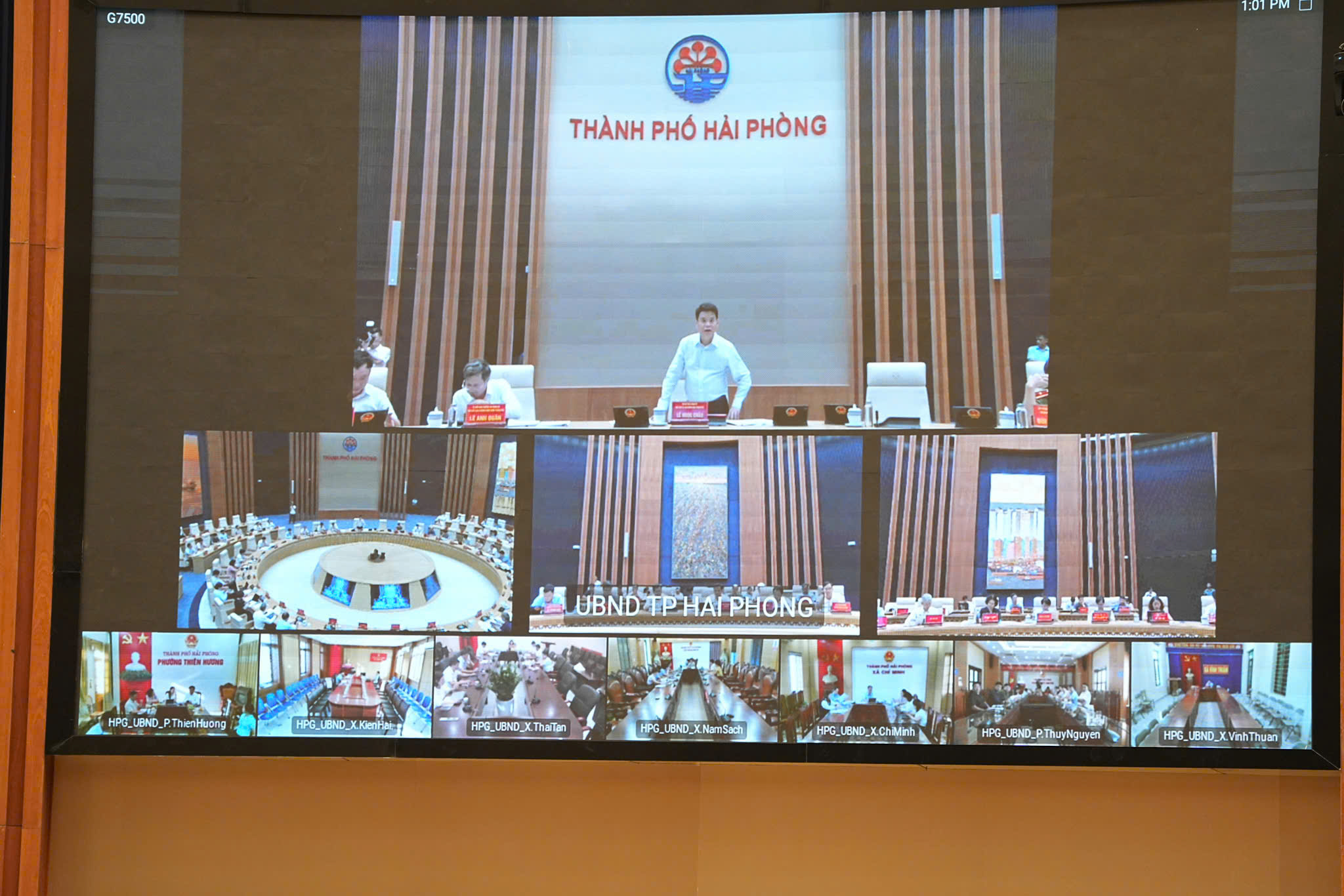
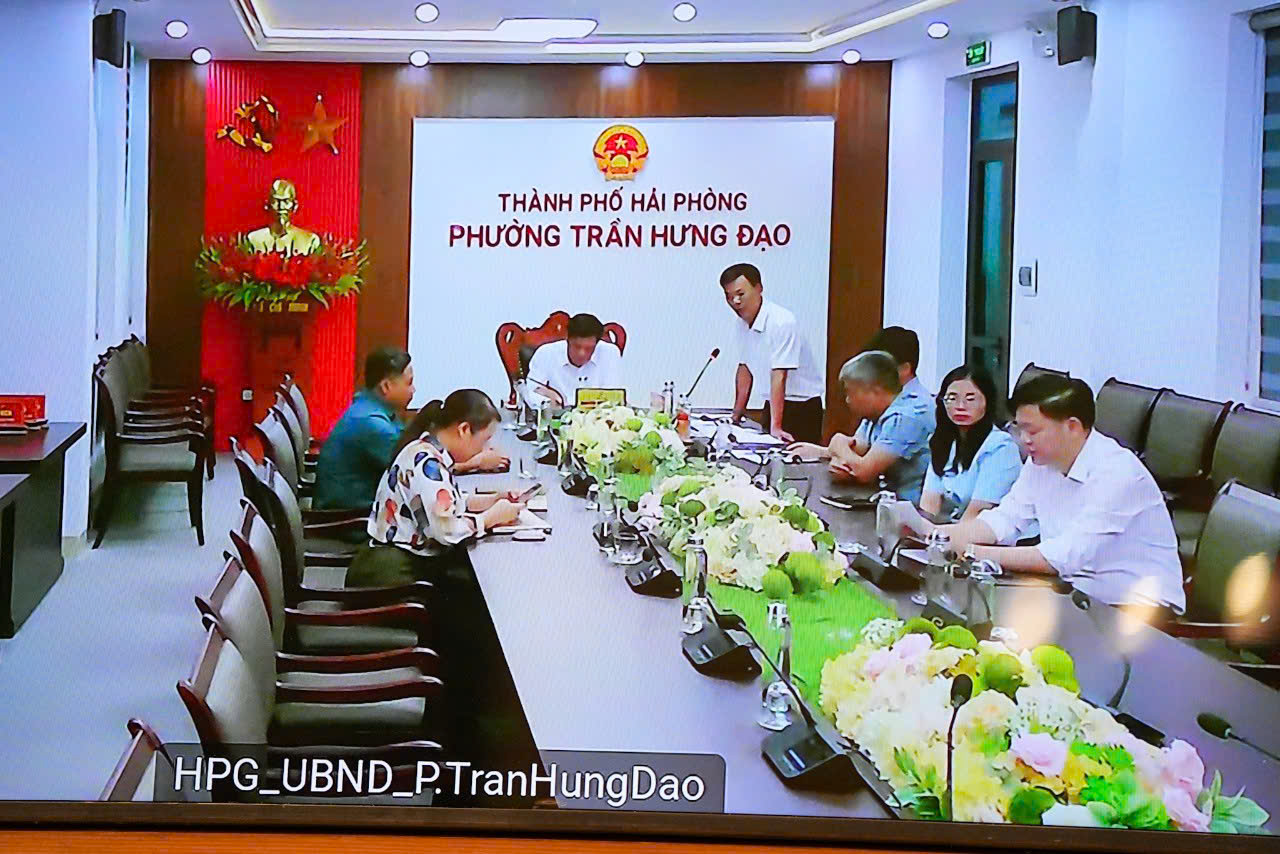
On the afternoon of October 1, chaired by Chairman Le Ngoc Chau of the Hai Phong City People’s Committee, the City People’s Committee held an online regular meeting to assess the implementation of socio-economic development tasks in September and the first nine months of the year, while discussing tasks and solutions for socio-economic development and ensuring national defence and security in the final three months of 2025.
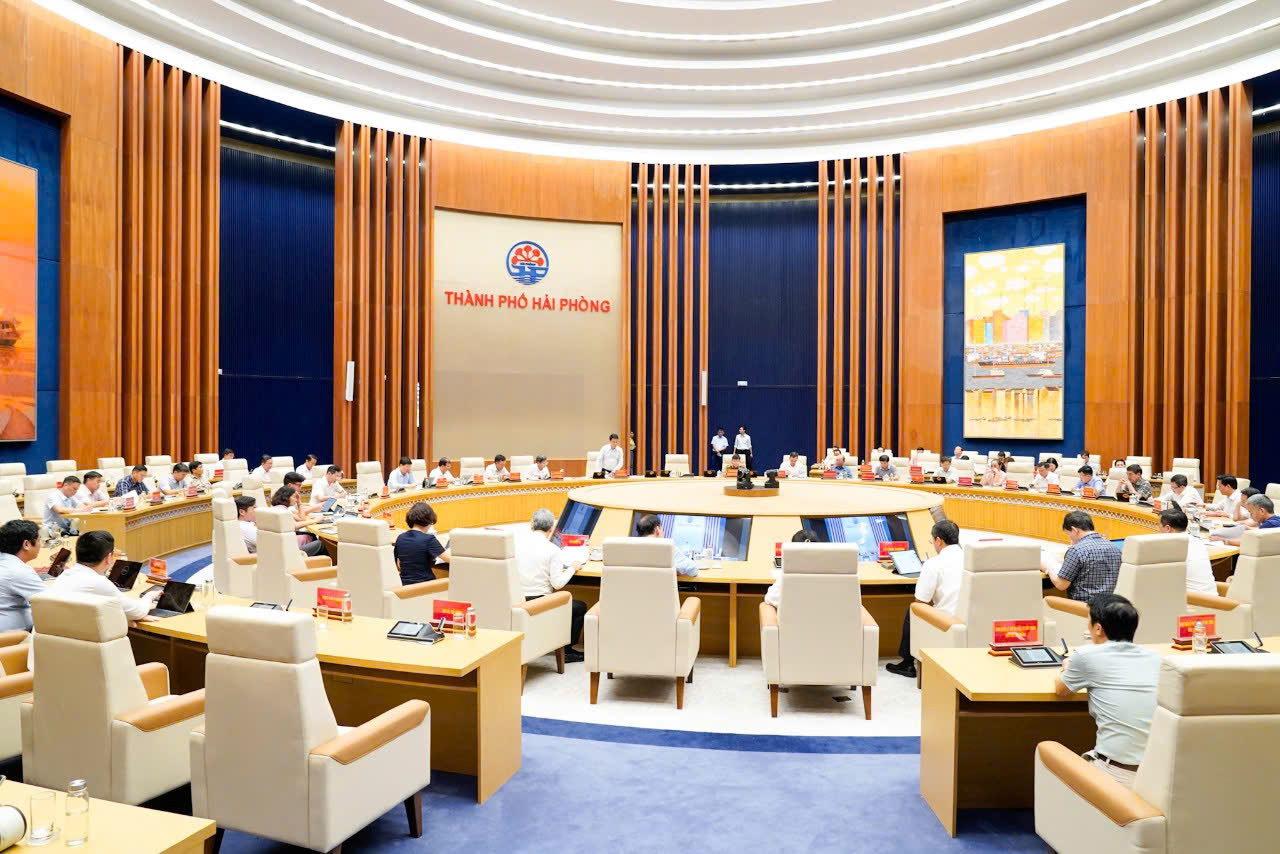
The meeting was attended by Vice Chairpersons of the City People’s Committee; representatives of the leadership of the City People’s Council, the Hai Phong National Assembly Delegation and the Party Committee of the City People’s Committee; and representatives of departments, sectors and functional units.
At commune-level meeting points, leaders of the Party Committee and People’s Committee, departments and specialised agencies were also present.
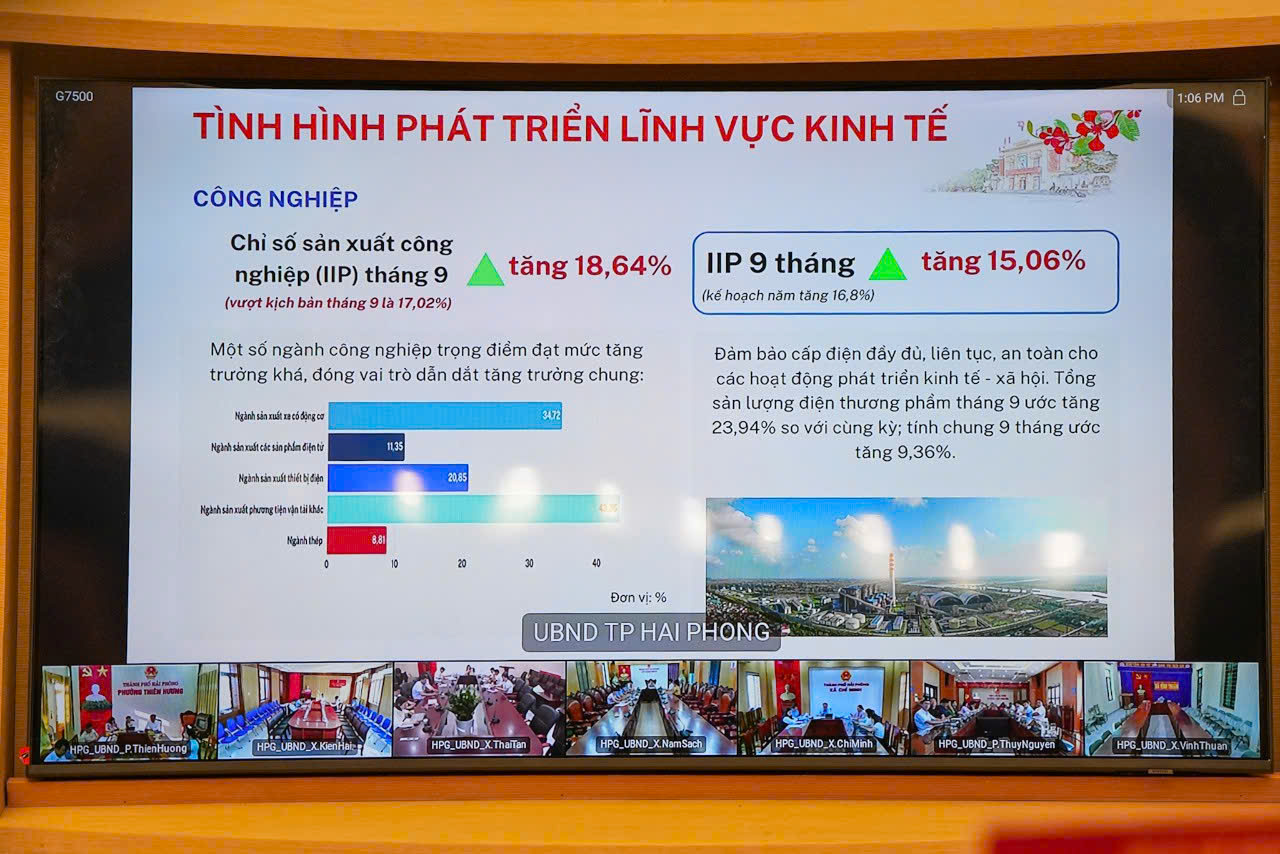
During the first nine months of 2025, Hai Phong made efforts to achieve its “dual goals”: carrying out the reorganisation of the two-tier local government apparatus to ensure smooth, effective and efficient operation, while focusing on socio-economic development. With the spirit of “solidarity, democracy, discipline, creativity and development”, the City People’s Committee closely followed the directions of the central authorities, the National Assembly, the Government, the Hai Phong City Party Committee and the City People’s Council, while promoting its leadership and direction and staying aligned with the set objectives and plans.
During the first nine months of 2025, Hai Phong made efforts to achieve its “dual goals”: carrying out the reorganisation of the two-tier local government apparatus to ensure smooth, effective and efficient operation, while focusing on socio-economic development. With the spirit of “solidarity, democracy, discipline, creativity and development”, the City People’s Committee closely followed the directions of the central authorities, the National Assembly, the Government, the Hai Phong City Party Committee and the City People’s Council, while promoting its leadership and direction and staying aligned with the set objectives and plans.
As a result, the socio-economic situation remained stable and broadly followed the growth scenario, with 10 of 13 key targets expected to meet or exceed expectations, including total budget revenue, investment capital, export turnover, cargo throughput, tourist arrivals, job creation, the proportion of trained workers holding certificates or degrees, the proportion of schools meeting national standards, the number of newly established enterprises and the number of completed social housing units. The two-tier local government model initially operated effectively; the city successfully held its first City Party Congress for the 2025–2030 term, creating an encouraging atmosphere among the people.
Alongside these efforts, the city successfully organised the 3rd meeting of the APEC Business Advisory Council (ABAC 3) and the 2025 investment promotion conference, affirming its international position while promoting its investment environment and development potential. Hai Phong has established 12 industrial parks covering 3,202 hectares; managed public investment flexibly and effectively; implemented Resolution No. 226/2025/QH15 on piloting special mechanisms and policies for city development; prepared a proposal dossier for establishing a Free Trade Zone; and cut administrative procedure processing times by 50%, helping create a favourable business environment. In the first nine months, domestic investment attraction increased 11.9-fold, the number of newly established enterprises rose 36.4%, and their registered capital was 2.8 times higher than in the same period last year.
In particular, the Yên Tử–Vĩnh Nghiêm–Côn Sơn and Kiếp Bạc complex of monuments and scenic sites was officially recognised by UNESCO as a World Cultural Heritage site. The city continues to focus on implementing the Politburo’s core resolutions and accelerating key projects to create momentum for sustainable development.
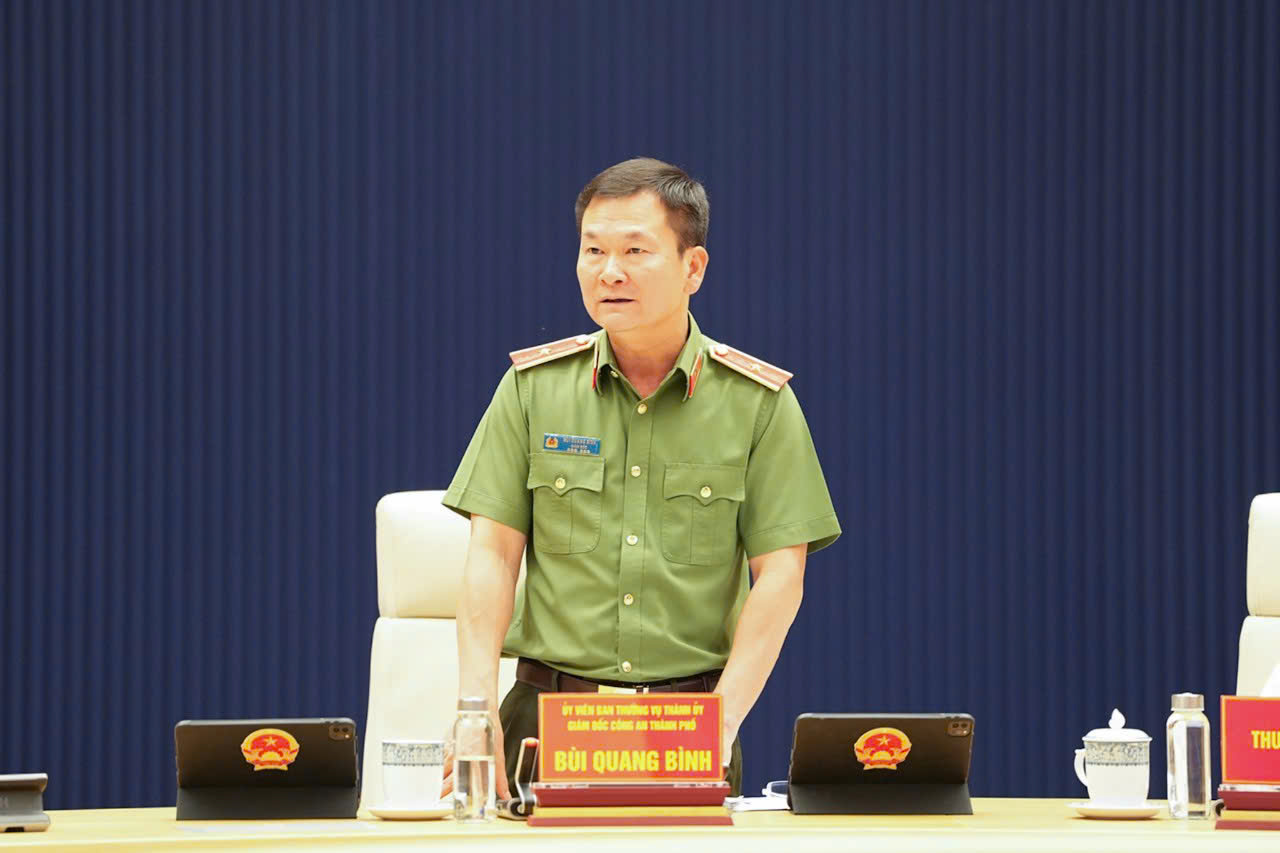
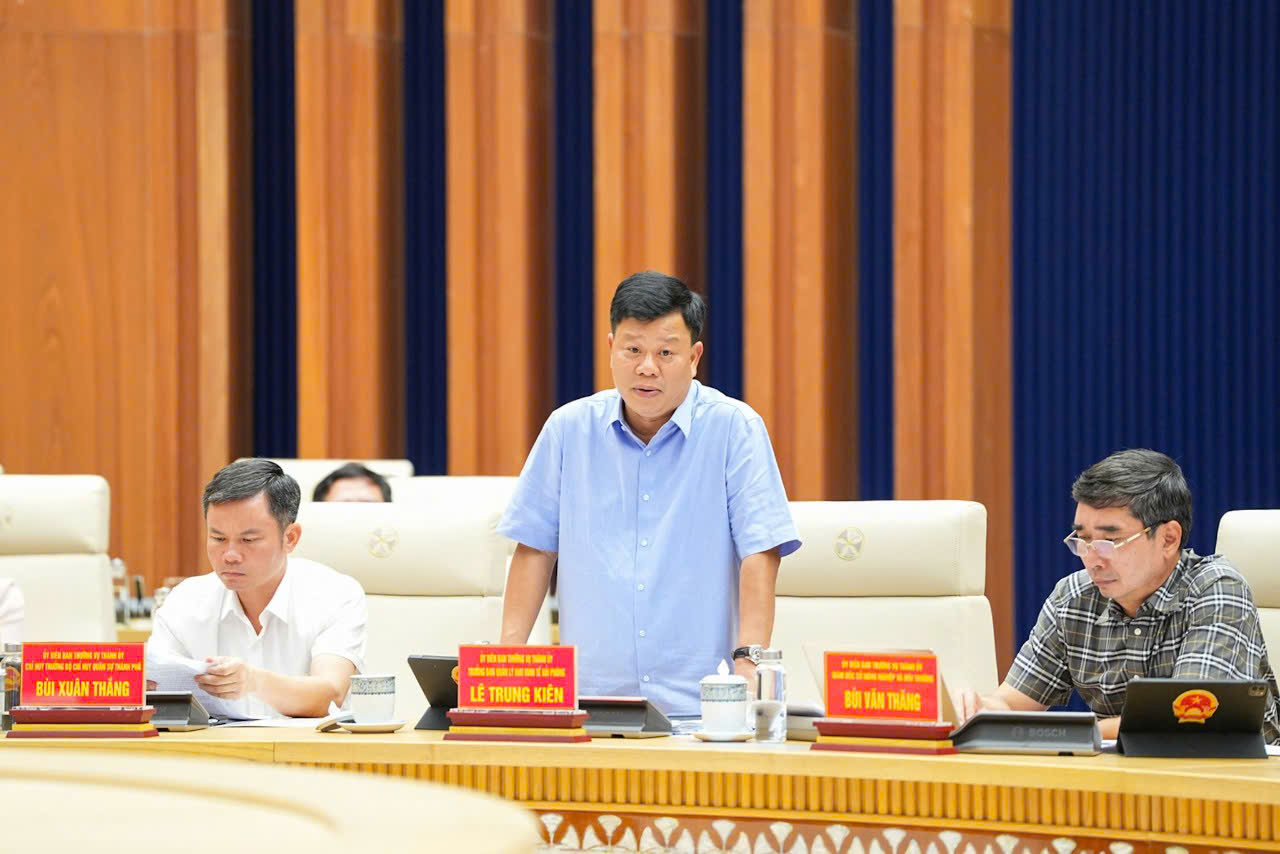
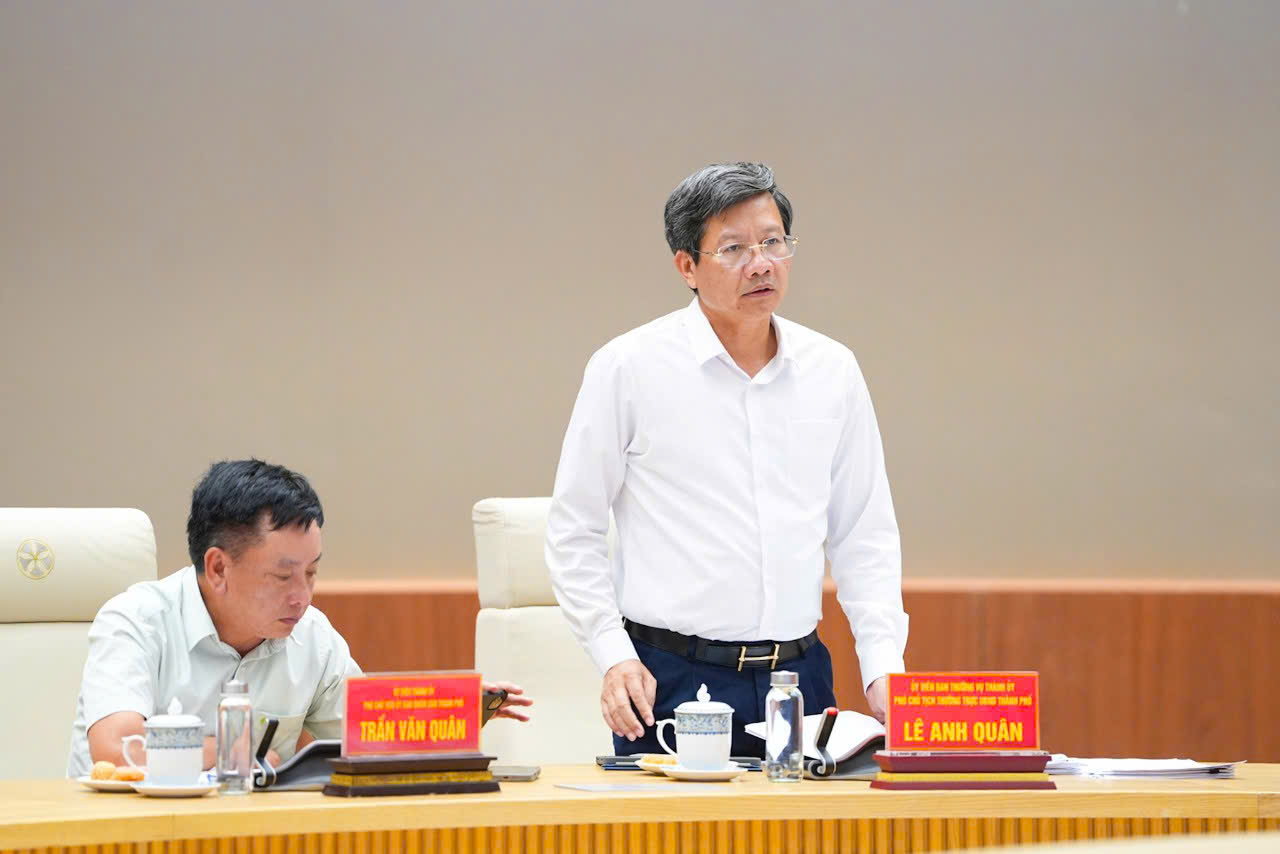
At the meeting, leaders of departments, sectors and localities focused on analysing and clarifying the outstanding results, while frankly identifying shortcomings and limitations that need to be addressed. Delegates said that in the first nine months of 2025 the city achieved many positive results, but three targets remained below expectations: third-quarter GRDP growth reached 12.38%, below the 13.92% scenario; cumulative nine-month GRDP growth reached 11.59%, below the 12.15% scenario; and foreign investment attraction reached only about 37.9% of the annual target, or USD 5.5 billion.
In addition, public investment disbursement at some units remained slower than planned and below the citywide average; the shortage of teachers at all levels has not been fully resolved; and the organisation and operation of the two-tier local government model still face difficulties and obstacles that require continued attention.
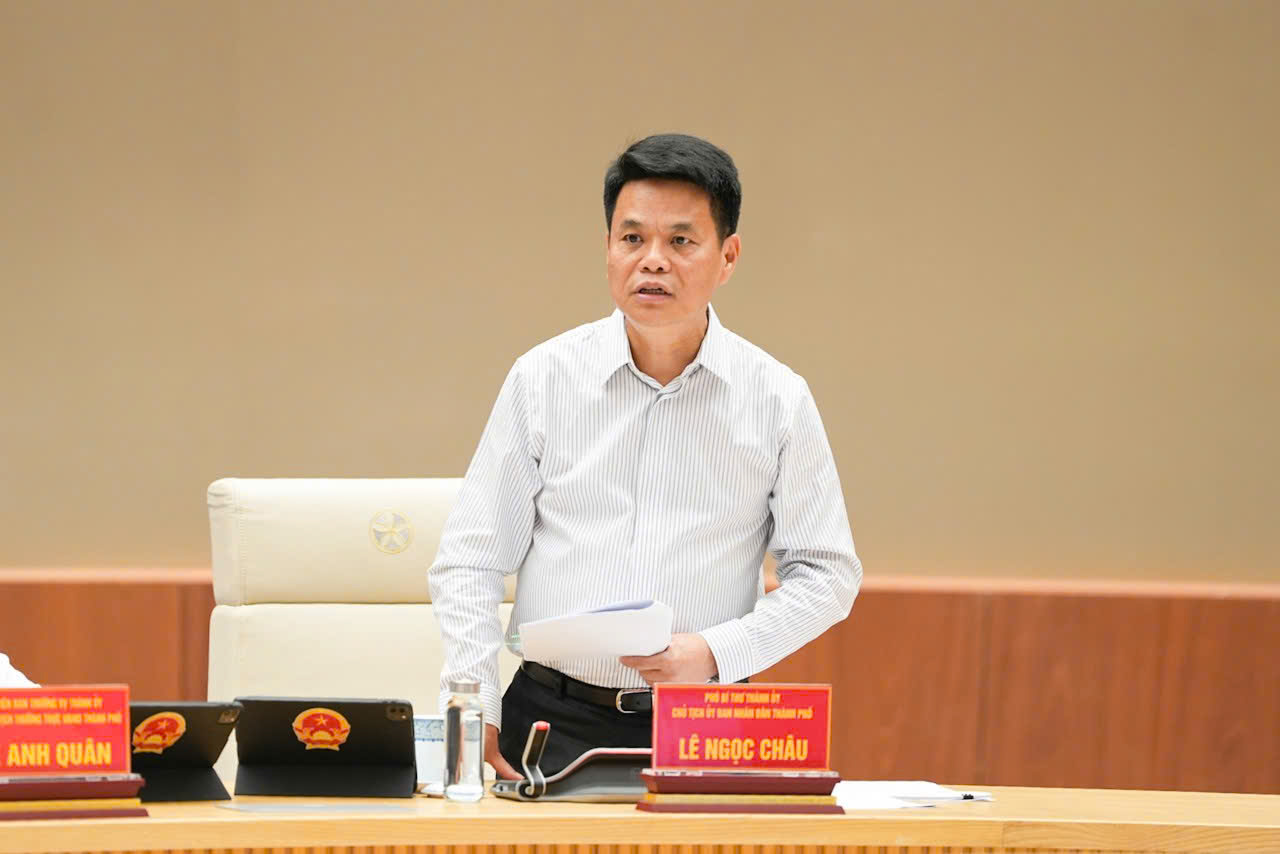
Concluding the meeting, Chairman Le Ngoc Chau of the City People’s Committee acknowledged and highly appreciated the efforts of all levels and sectors in directing and administering the city, maintaining national defence and security, and developing the socio-economic situation over the past nine months, with many encouraging results.
However, the Chairman emphasised that many difficulties and limitations remain, requiring greater determination, proactivity and creativity in leadership, direction and implementation. He asked all levels and sectors to closely follow the directions of the central authorities, the Hai Phong City Party Committee, the City People’s Council and the City People’s Committee; closely monitor implementation; seriously complete tasks under the socio-economic growth and public-investment disbursement scenarios; and strive to disburse more than 100% of the capital plan assigned by the Prime Minister. At the same time, the city must focus on completing its 2025 tasks under Politburo Resolutions No. 57-NQ/TW, 59-NQ/TW, 66-NQ/TW and 68-NQ/TW and the City People’s Committee’s plan, and effectively implement National Assembly Resolution No. 226/2025/QH15 piloting special mechanisms and policies for Hai Phong’s development, with 70 specific tasks, including 10 tasks to be submitted to the City People’s Council at its 30th thematic session.
The Chairman also directed the city to continue accelerating administrative reform and digital transformation and to strengthen discipline and administrative-service conduct. Departments, sectors and agencies must regularly monitor and understand the situation at the grassroots level, proactively remove difficulties and obstacles, and promptly report matters beyond their authority to the City People’s Committee. At the same time, they must urgently address limitations in governance and administration capacity and shift decisively from an administrative-management mindset to an enabling government that serves the people, ensuring smooth and effective operations.
With the potential and advantages of Hai Phong after the merger, Chairman Le Ngoc Chau asked sectors and localities to research, propose and implement breakthrough mechanisms, policies and solutions; fully tap the city’s distinctive potential, outstanding opportunities and competitive advantages; turn potential into sustainable resources and internal strength; and help Hai Phong develop rapidly and sustainably while improving the people’s material and spiritual well-being./
Source: Hai Phong City Electronic Information Portal