HEZA · International Event · APEC ABAC 2025
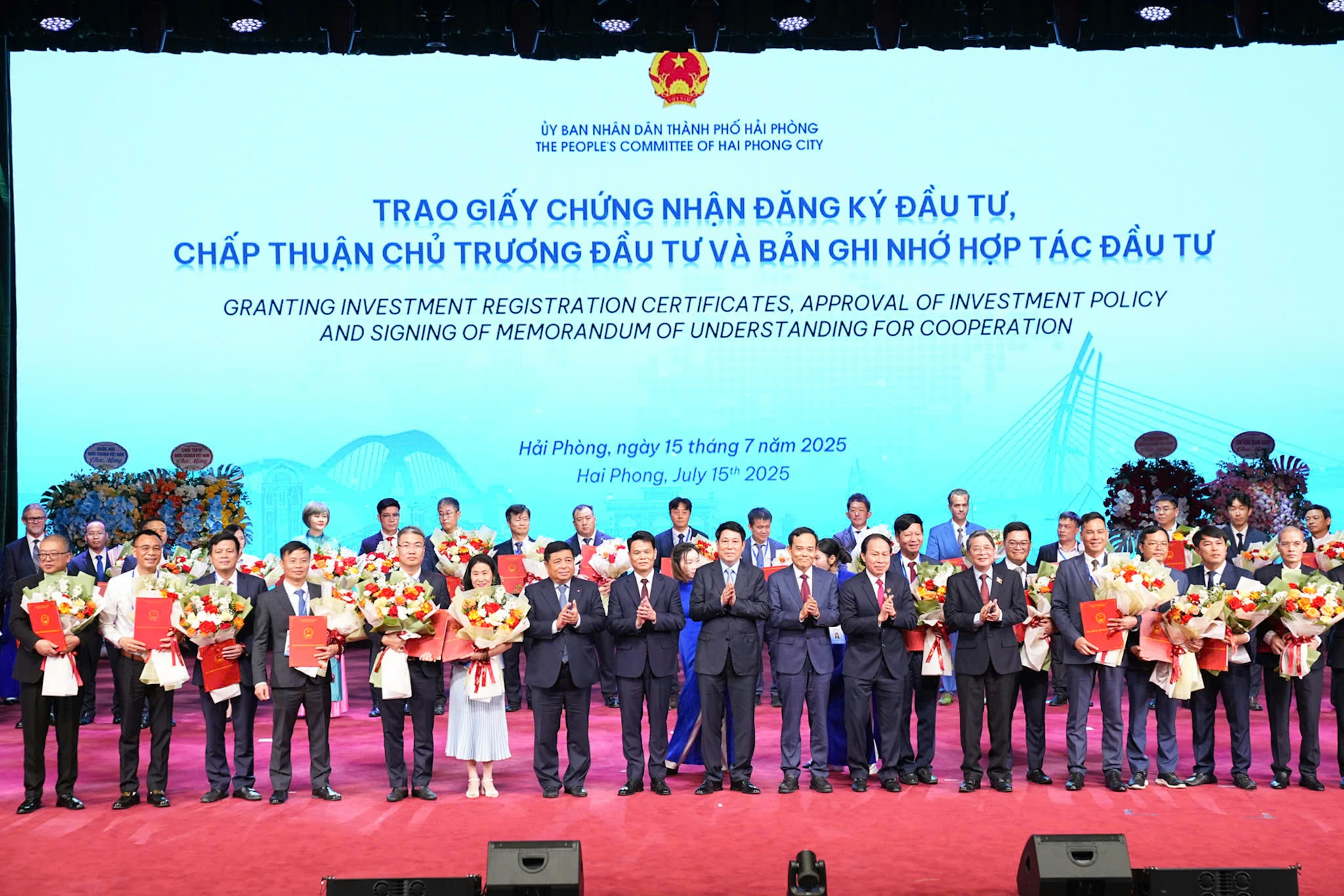
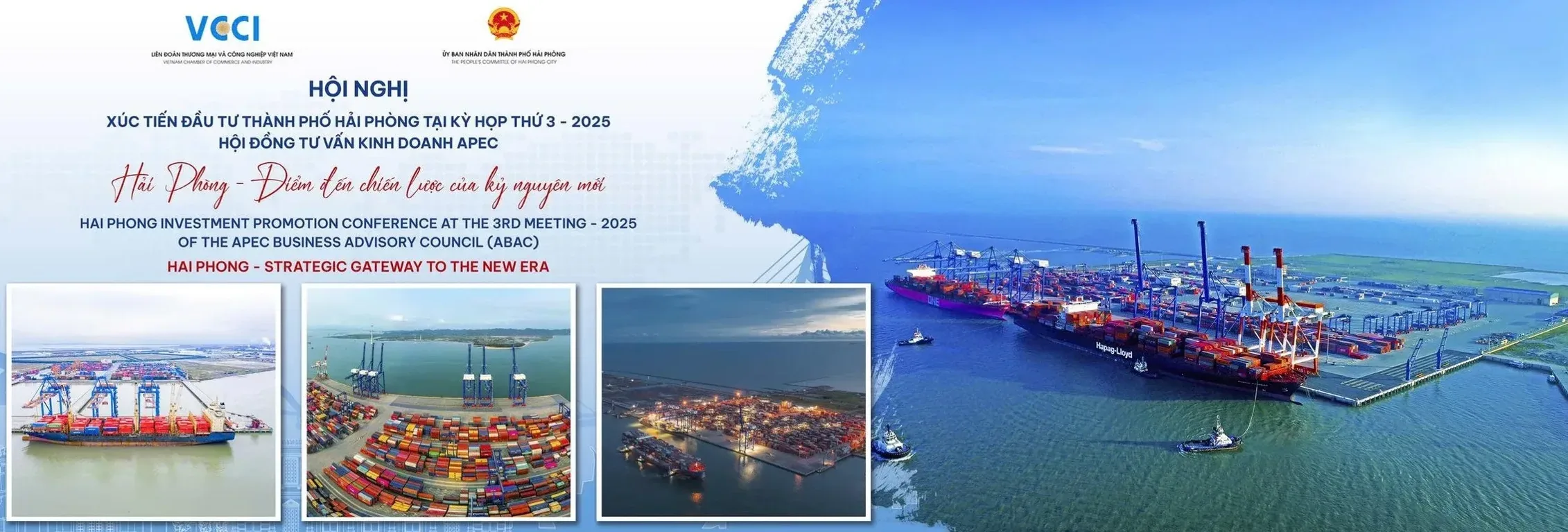
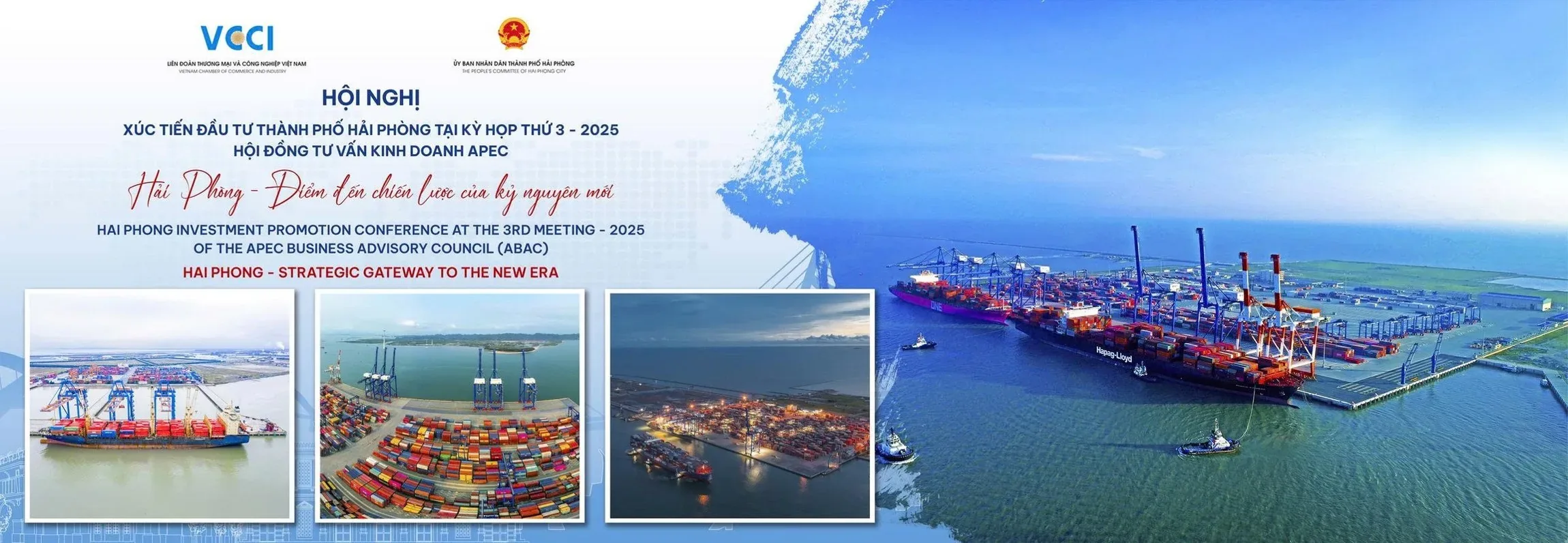
Hai Phong Investment Promotion Conference at the 3rd Meeting of the 2025 APEC Business Advisory Council
Hai Phong Investment Promotion Conference at the 3rd Meeting – 2025 of the APEC Business Advisory Council · Hai Phong: Strategic Gateway to the New Era
- Date15/7/2025July 15, 2025
- Time14:30 – 17:30to be held from 14:30 to 17:30
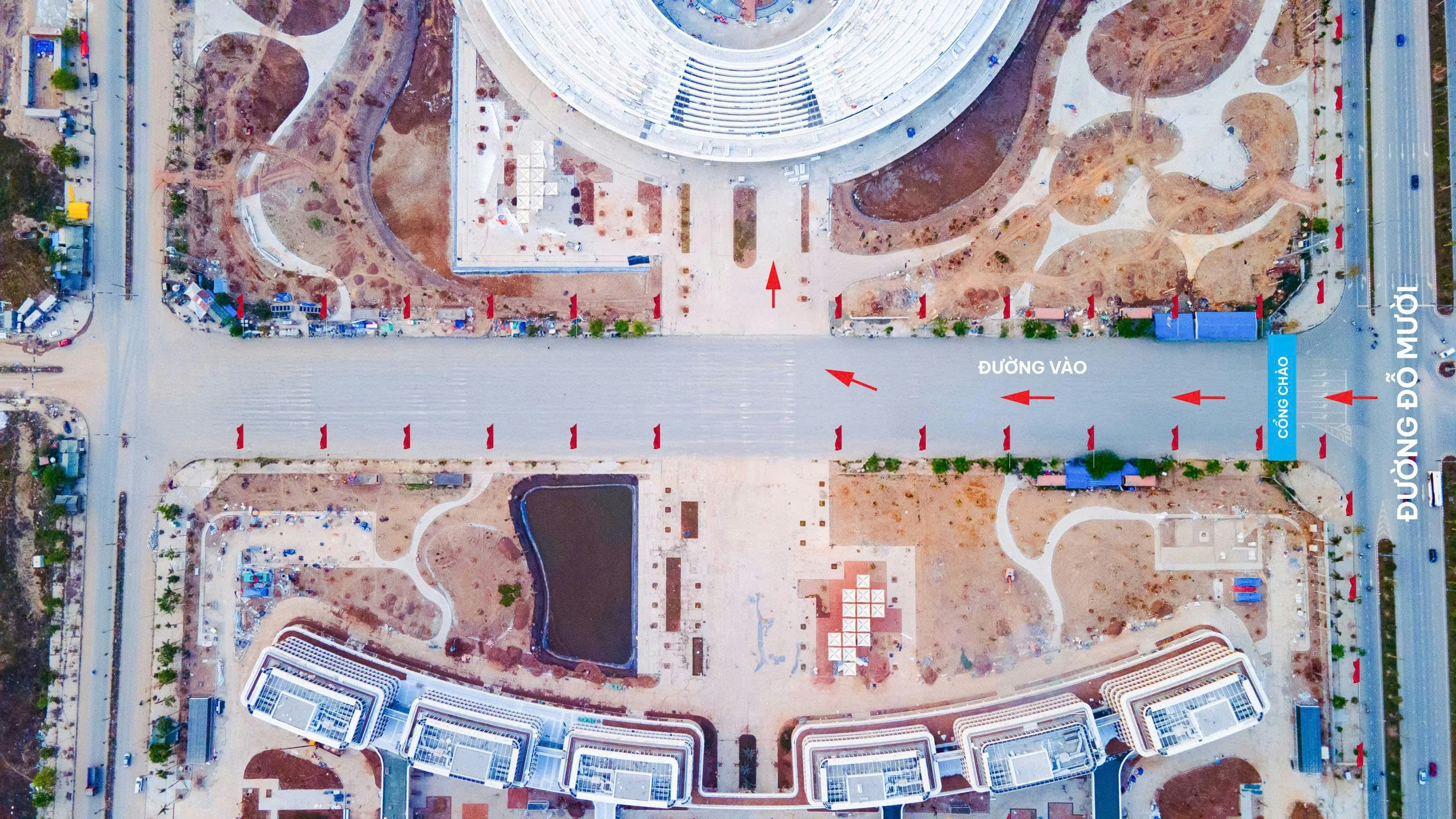
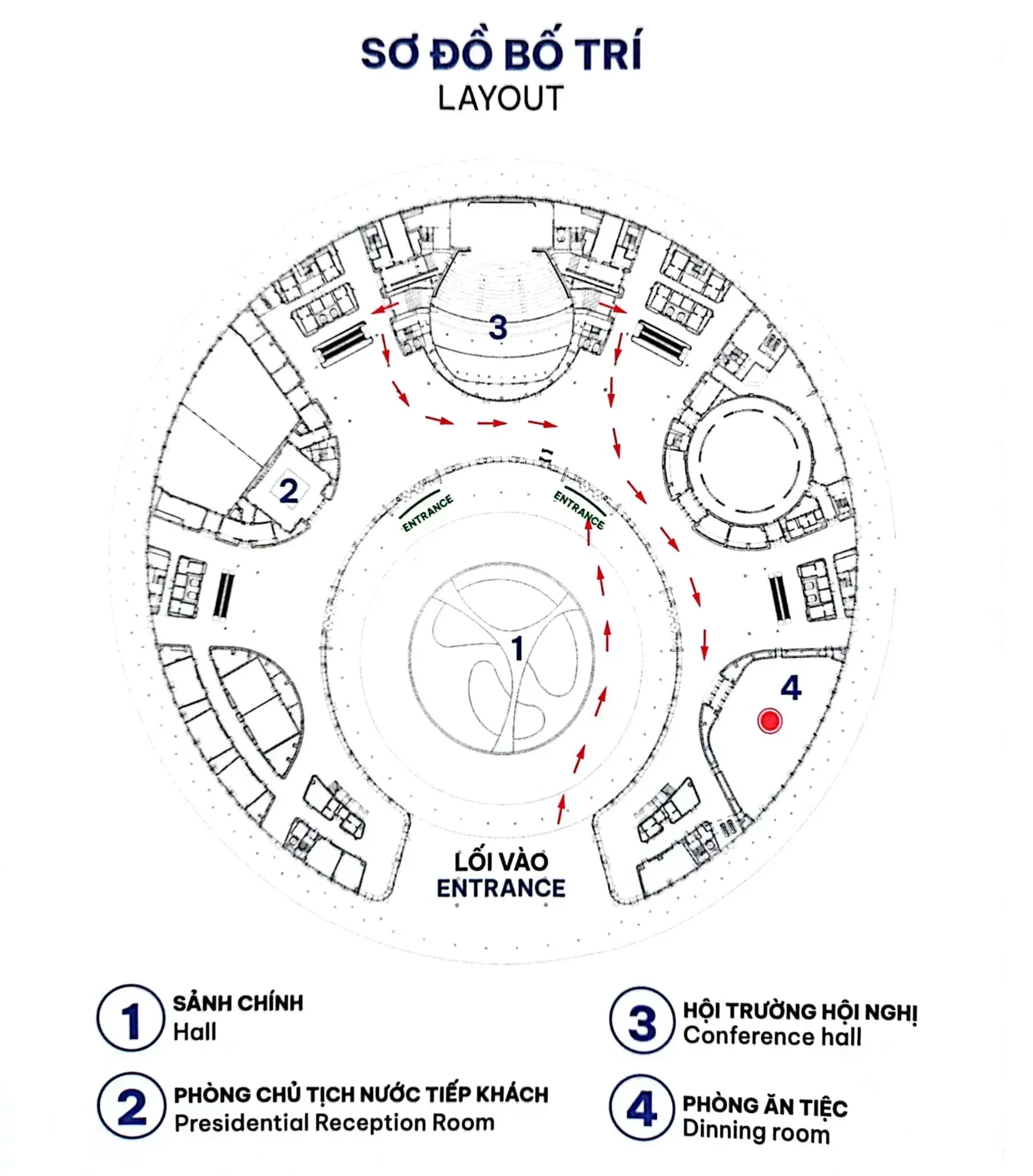
- VenueHai Phong City Conference and Performance Center
APEC member economies















Event venue
Hai Phong City Conference and Performance Center
About APEC
Development goals and orientations
APEC aims for an open, dynamic, resilient and peaceful Asia-Pacific region.
01How did APEC become a 21-member forum?
In the context of globalization, countries and regions became increasingly interdependent, creating a need to deepen and expand economic cooperation.
In Seoul, South Korea, in January 1989, Australia proposed establishing a ministerial-level economic advisory forum in the Asia-Pacific to coordinate government activities, promote regional economic development and support the multilateral trading system.
The Pacific Rim economies of Brunei, Canada, Indonesia, Japan, South Korea, Malaysia, New Zealand, the Philippines, Singapore, Thailand and the United States supported Australia’s proposal.
Meeting in Canberra, Australia, in November 1989, the 12 economies decided to establish the Asia-Pacific Economic Cooperation forum (APEC) and became its founding members.
China, Chinese Taipei and Hong Kong, China joined APEC in 1991. Mexico and Papua New Guinea joined in 1993, Chile in 1994, and Peru, Russia and Viet Nam became APEC members in 1998.
This is the key transport chain linking the three major economic, political and tourism centers of northern Viet Nam: Ha Noi, Hai Phong and Quang Ninh.
02What do the Bogor Goals mean for APEC’s development?
At the 1994 meeting in Bogor, Indonesia, APEC economic leaders adopted the Bogor Goals. This was an important milestone in APEC’s formation and development.
Under the Bogor Goals, APEC leaders affirmed their determination to pursue trade and investment liberalization. Taking account of different levels of development, the goals set 2010 for developed members and 2020 for developing members as target years.
The Bogor Goals became a direction for APEC cooperation and helped the forum develop into a leading region for trade and investment liberalization. They inspired APEC members to pursue economic development through open trade and facilitated investment flows in the region.
03What goals does the APEC Vision 2040 set for the Asia-Pacific community?
Trade and investment:
To keep the Asia-Pacific the world’s most dynamic and connected economic region, APEC will continue close coordination to build a free, open, fair, non-discriminatory, transparent and stable trade and investment environment.
APEC supports agreed World Trade Organization (WTO) rules to make the multilateral trading system effective and international trade flows stable and predictable.
APEC will continue to advance the Bogor Goals and market-oriented regional economic integration, including the agenda for a Free Trade Area of the Asia-Pacific (FTAAP), strengthening high-standard and comprehensive regional commitments. It will also promote connectivity, sustainable supply chains and responsible business.
Innovation and digitalization:
To enable all people and businesses to participate and thrive in a closely connected global economy, APEC promotes an enabling environment with market orientation, digital economy development and innovation.
APEC promotes structural reform and sound economic policies to foster innovation, productivity and dynamism. It strengthens digital infrastructure, accelerates digital transformation, narrows the digital divide, facilitates data flows and builds consumer and business trust in digital transactions.
Strong, balanced, secure, sustainable and inclusive growth:
To ensure the Asia-Pacific can withstand shocks, crises, pandemics and other emergencies, APEC promotes quality growth that delivers concrete benefits and improves health and well-being for all, including micro, small and medium-sized enterprises, women and groups with untapped economic potential.
To better equip people with future skills and knowledge, APEC strengthens comprehensive human resource development and economic and technical cooperation. It promotes policies, cooperation and economic growth that support global efforts to address environmental challenges for a sustainable planet.
To maintain APEC’s special role as the leading regional economic cooperation forum and an effective incubator of modern ideas, APEC continues institutional reform through good governance and stakeholder engagement.
04APEC Vision 2040: implementation journey
Since its establishment in 1989 and through more than 30 years of development, APEC has remained a leading regional economic integration mechanism, pioneering economic, trade and investment liberalization and contributing significantly to growth, peace, stability, cooperation and development in the Asia-Pacific.
To prepare APEC for a new development phase as the world changes rapidly and profoundly under the Fourth Industrial Revolution, APEC is implementing major strategies and cooperation programs, including an enhanced structural reform agenda; the Services Competitiveness Roadmap and Connectivity Blueprint to 2025; an inclusive economic, financial and social development agenda to 2030; a human resource development framework for the digital age to 2025; and the La Serena Roadmap for Women and Inclusive Growth to 2030.
In 2020, APEC leaders adopted the APEC Vision 2040 to build an open, dynamic, resilient and peaceful Asia-Pacific for the prosperity of all people and future generations. To implement it, APEC advances three cooperation pillars: trade and investment; innovation and digitalization; and strong, balanced, secure, sustainable and inclusive growth. The Vision reaffirms voluntary, consensus-based and non-binding principles, equal cooperation, shared responsibility, mutual respect and common benefit.
In 2021, APEC leaders adopted the Aotearoa Plan of Action, setting specific goals and actions to implement the APEC Vision 2040 in three parts. It sets goals and individual economy commitments, as well as collective APEC action across the Vision’s three cooperation pillars. APEC proposed improving the forum’s institutional effectiveness with specific targets to 2025, reviewed implementation results and renewed the action plan.
Participation guide
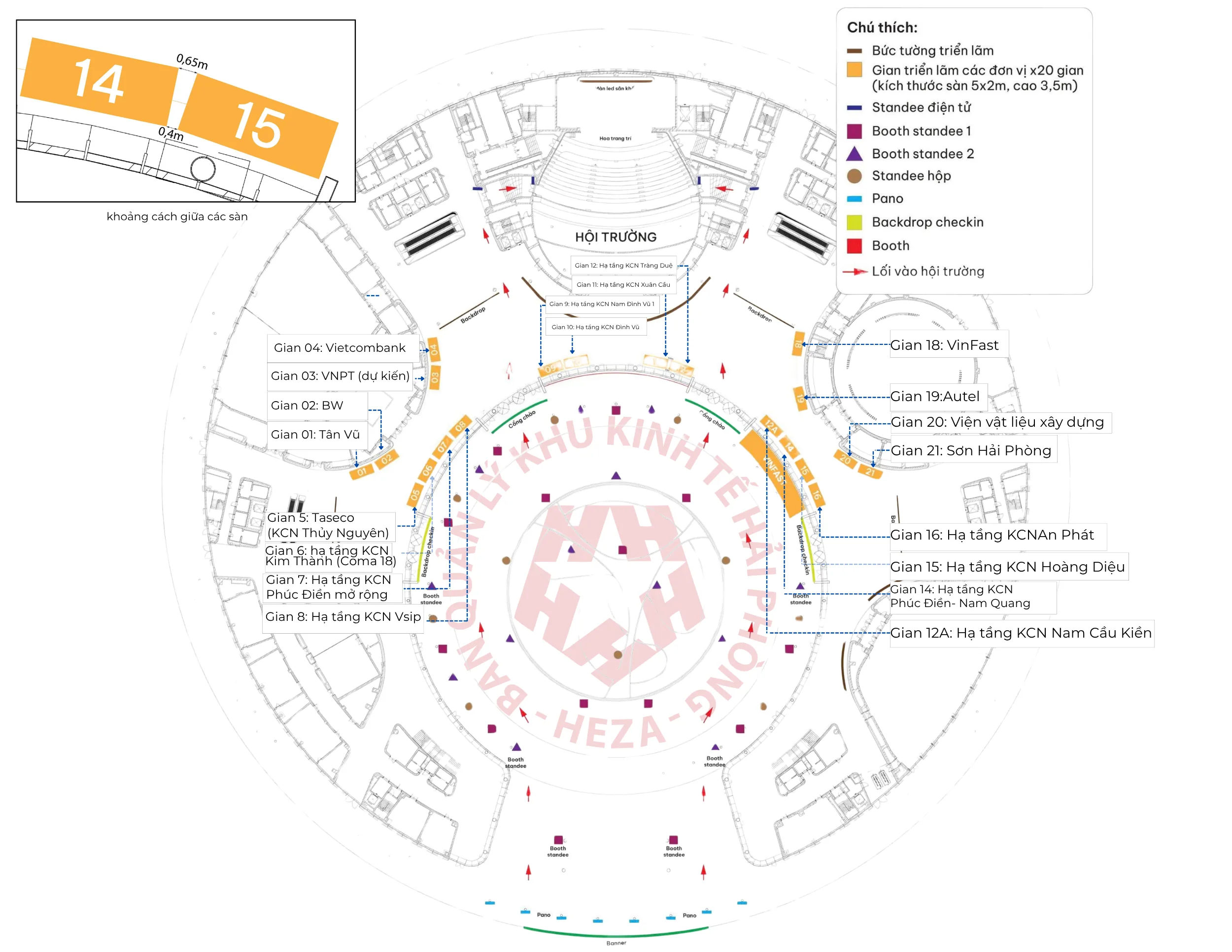
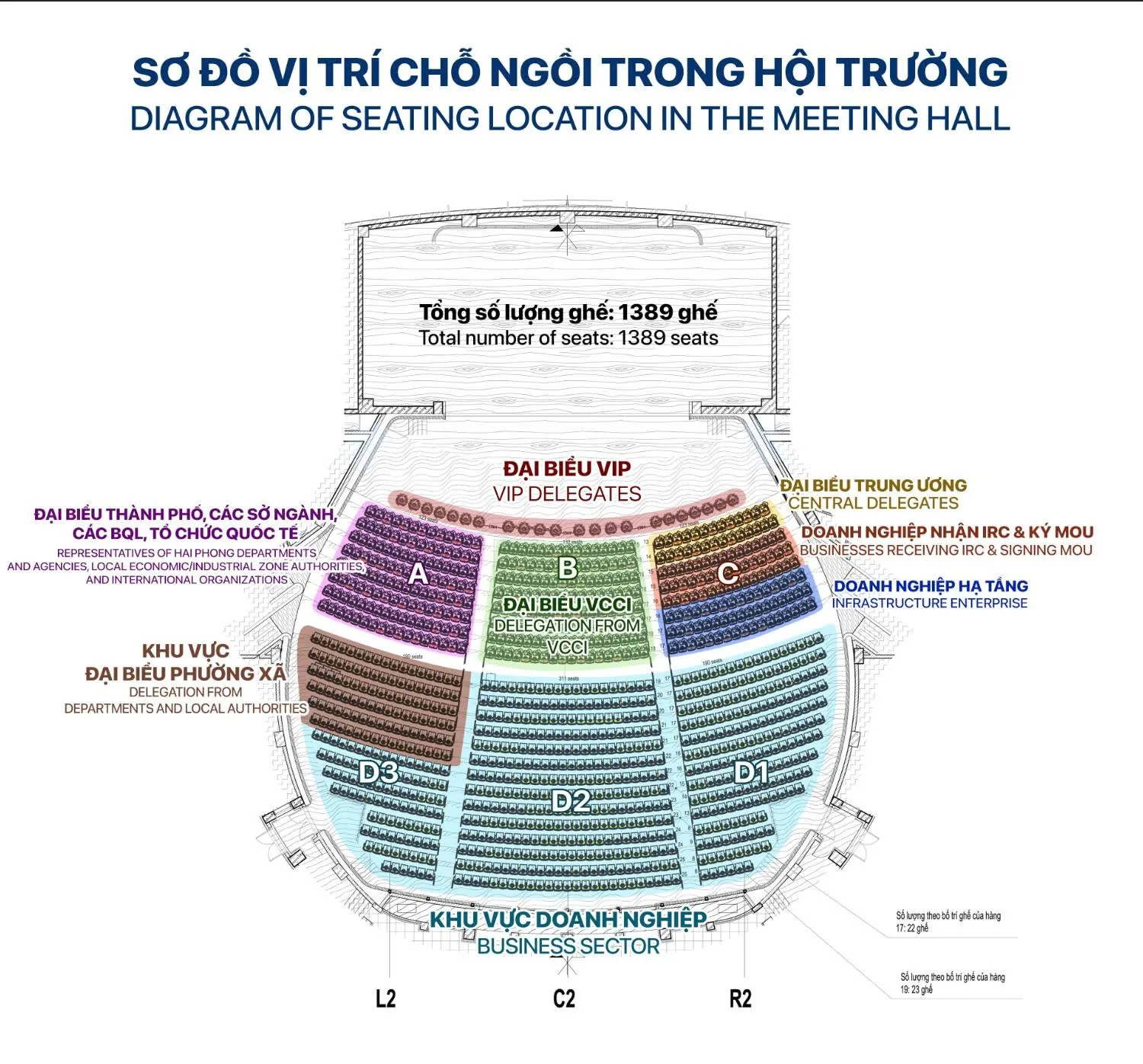
Map & registration
Register
- Value
View chart data
| Category | Value |
|---|---|
| An Duong | 3,00 |
| An Phat 1 | 2,00 |
| Binh Giang | 3,00 |
| Cam Dien – Luong Dien | 2,00 |
| CBRE (Vietnam) | 1,00 |
| Cong Hoa | 3,00 |
| An Tho Industrial Cluster | 1,00 |
| Phuoc Vinh Dong 3 Industrial Cluster, Long An | 1,00 |
| Dai An | 8,00 |
| Deep C | 11,00 |
| Dinh Vu (Deep C1) | 9,00 |
| Do Son | 1,00 |
| Gia Loc | 1,00 |
| Associations | 3,00 |
| Hoang Dieu | 1,00 |
| Nhon Trach Textile and Garment Industrial Park | 1,00 |
| Nomura – Hai Phong Industrial Park (Phase 2) | 1,00 |
| Kim Thanh | 1,00 |
| Gyeonggi-do, Korea | 1,00 |
| An Phat High-Tech | 2,00 |
| Lai Cach | 3,00 |
| Lai Vu | 3,00 |
| Luong Dien – Ngoc Lien | 1,00 |
| Nam Cau Kien | 9,00 |
| Nam Dinh Vu (Area 1) | 21,00 |
| Nam Sach | 2,00 |
| Outside Industrial Zone/Economic Zone | 9,00 |
| Japan – Hai Phong | 16,00 |
| Phu Thai | 2,00 |
| Phuc Dien | 5,00 |
| Quan Toan | 1,00 |
| Tan Truong | 2,00 |
| Tien Thanh | 2,00 |
| Other Organizations | 12,00 |
| Trang Due | 20,00 |
| VSIP | 11,00 |
| Xuan Cau | 4,00 |
Exhibition
Booths



Overview
- Developer: Shinec Joint Stock Company (Shinec JSC)
- Total area: ≈263 ha (phase 1)
- Highlights: Innovation center, convenient services for experts, and an “eco-industrial park – circular economy” model
Description
Library
Conference photos



News
Partners